
Kalam IAS Academy was founded by a team of committed individuals who believe that the traditional way of UPSC preparation needs to be changed.

IE Opinion: Gandhi led by example — his life is full of moments of quiet courage
Syllabus: Pre/Mains – Ethics, History
Why in News?
Gandhi Jayanti (Oct 2) → highlighting lesser-known moments of Gandhi’s quiet courage & moral strength
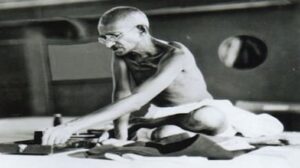
Gandhi’s Courage in Action
- Johannesburg Plague, 1904 → Volunteered to nurse abandoned plague patients → risked own life despite family dependence → English nurse colleague died
- Kasturba’s Illness → Doctor advised meat broth → Kasturba refused on faith grounds → Gandhi supported her choice over medical advice → nursed with nature cure → she survived
- Ahmedabad Ashram, 1915 → Admitted “untouchable” family → sponsors withdrew support → ashram near closure → saved by Ambalal Sarabhai’s aid
Discipline & Principles
- Family Discipline → Son Manilal helped Harilal secretly → Gandhi punished by banishment to Madras for 1 year → stressed rule over personal bond
- Untouchability Opposition → Defied orthodox society despite financial crisis → moral stand > survival
Facing Violence & Death
- Assassination Attempts → 5+ attempts (bombs, knives) → refused police security → even invited Godse to ashram (Godse declined)
- Noakhali Riots, 1946 → Walked barefoot through riot-hit villages → no security → spread peace, restored harmony
- Snake Incident, Wardha → Snake crawled on lap during prayer → Gandhi stayed calm, forbade killing → embodied fearlessness
Essence of His Courage
→ Not reckless defiance ✦ Instead: discipline + self-mastery + moral conviction
→ Prioritised principles > life, comfort, family
→ Courage as lived philosophy, not performance.
Test Your Knowledge 01
Q. If Gandhi’s decision to admit an “untouchable” family in Ahmedabad Ashram were viewed through today’s governance lens, it best reflects:
(a) Social justice outweighing immediate institutional survival
(b) Political populism over principled leadership
(c) Pragmatism in financial management of NGOs
(d) Strategic compromise for community support
Hint: Gandhi risked losing funds but upheld equality → values > survival → social justice first.
IE Opinion: The Mahatma vs memes: Reading Gandhi in the age of algorithm
Syllabus: Pre/Mains – Ethics, History
Why in News?
Gandhi’s philosophy re-read in an era dominated by algorithmic simplifications and meme culture — a timely critique.
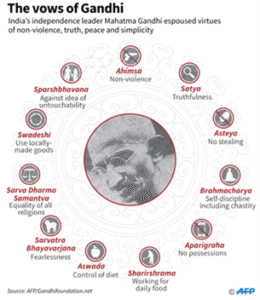
Gandhi vs Algorithmic World
- Digital reduction: Big historical figures reduced to memes, infographics, binary labels (hero/villain)
- Structural threat: algorithms reward conflict, not depth
- Contradictory values: patience, nuance, self-reflection resisted by machines built on speed, outrage & extremes
Understanding Gandhi Beyond Soundbites
- Immersion > skimming: Gandhi’s texts (e.g. Hind Swaraj) demand sustained reflection
- Swaraj as inner sovereignty: Gandhi saw self-rule as mastering one’s impulses, not just ousting colonial power
- Online activism’s shallow frame: focuses on external enemies, lacks deliberate self-critique
- Beyond power: unlike Marx, Gandhi asked “what next?” — how to sustain justice after regime change
- Inclusive politics: promoted consensus, middle path, respect for diversity
Analogue Soul in a Digital World
- Algorithms & outrage: emotionally charged posts get more clicks, shares, boosting engagement metrics
- Gandhi’s methods: fasting, silence, walking — withdrawal of energy to provoke moral pause
- Ahimsa as force: nonviolence not passivity but disciplined resistance, preserving humanity in opponent
- Digital dehumanisation: trolling, doxxing, public shaming are methods of psychological violence
- Satya (Truth): Gandhi’s life = “experiment in truth”, open to being wrong; today “my truth” dominates, pluralism shrinks
- Algorithmic echo chambers & filter bubbles isolate dissenting voices
Gandhi: Too Human for Today
- Politics = branding now; Gandhi evolved publicly, admitted errors
- His autobiography records mistakes, corrections — brave vulnerability
- Current logic: admitting error = weakness; online mob rushes in
- Algorithms discourage nuance and evolution; they reward rigid certainty
Contemporary Relevance
- A paradigm of coexistence: Gandhi offers politics beyond zero/one binaries
- Digital invisibility: his complexity gets flattened or erased by design
- Quiet resistance: reading and engaging his ideas with nuance is itself a counter-gesture
- Between 0 & 1 lies an ocean of complexity — we must recover that space
Test Your Knowledge 02
Q. According to Gandhi, true Swaraj primarily meant:
(a) Complete political independence from colonial rule
(b) Decentralisation of economy and village autonomy
(c) Inner self-mastery and control over impulses
(d) Establishment of a socialist state
IE Opinion: RSS at 100: A century of service, culture, and nation-building
Syllabus: Pre/Mains – History
Why in News?
RSS marks 100 years (1925–2025) → centenary of world’s largest voluntary socio-cultural organisation.
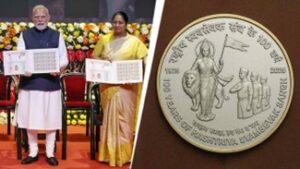
PM unveils Rs 100 coin at RSS event, Bharat Mata features on currency for 1st time
Origins & Growth
- Founded 1925, Nagpur → Dr K.B. Hedgewar
- Motto → “Nation first, self later”
- Shakhas → daily drills, discipline, cultural grounding
- Expansion → from local seed → global outreach (diaspora networks)
Role in Nation-Building
- Education → Vidya Bharati schools (20k+ institutions)
- Health & relief → Seva Bharati, disaster response (tsunami, COVID-19)
- Rural dev. → Gram Vikas projects, tribal outreach
- Unity work → reducing caste barriers, community integration
Trials & Challenges
- Colonial suspicion → Hedgewar jailed 1930–31
- Ban post-Gandhi assassination (1948) → lifted after acquittal
- Emergency (1975–77) → RSS resisted authoritarianism
- Continuous opposition from ideological rivals → yet expansion continued
Ideological & Cultural Impact
- Nationalism → “Bharat Mata ki Jai” slogan roots in shakhas
- Cultural pride → revival of Hindu traditions, festivals, language promotion
- Moral ethos → humility, service, sacrifice above power/fame
- Family & society → discipline, organisation, collective spirit
Leadership & Legacy
- Produced leaders → Atal Bihari Vajpayee, Deendayal Upadhyaya, Narendra Modi, countless social workers
- Emphasis on anonymity → swayamsevaks work without personal credit
- Political influence → ideological parent of BJP
Criticism & Controversy
- Accusations → majoritarianism, cultural homogenisation
- Bans (3 times in history) → yet legally reinstated
- Debate → role in secular-democratic India vs Hindu cultural nationalism
The Road Ahead (Next 100 Years)
- Goal → India as Vishwaguru (spiritual & cultural teacher)
- Emphasis → values, ethics, collective discipline over materialism
- Focus → social harmony, global outreach, moral leadership
- Challenge → balancing modernity with tradition, inclusivity with ideology
👉 Centenary = not just org. milestone, but civilisational affirmation: RSS as force of service, culture, nationalism shaping India’s destiny
Test Your Knowledge 03
Q. The idea of “Nation first, self later” associated with RSS is closest to which of the following Indian philosophical traditions?
(a) Lokayata (Materialist)
(b) Advaita Vedanta
(c) Karma Yoga of Bhagavad Gita
(d) Charvaka philosophy
Hint: Philosophy that stresses selfless duty, sacrifice, and service without attachment to personal gain → aligns with Karma Yoga of Gita.
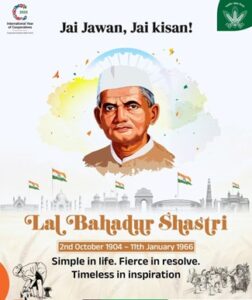
Lal Bahadur Shastri Birth Anniversary (2 Oct 2025)
Personal Life & Traits
- Born: 2 Oct 1904, Mughalsarai (UP); shares birthday with Mahatma Gandhi.
- Education: Banaras Hindu University → strong nationalist leanings.
- Known for: ✦ Simplicity ✦ Honesty ✦ Humility ✦
- Title “Shastri” → academic degree from Kashi Vidyapeeth.
Political Journey
- Joined freedom struggle → imprisoned multiple times in Civil Disobedience, Quit India Movement.
- Post-Independence → Minister of Police & Transport, UP → introduced female conductors, water jets for crowd control (instead of lathi).
- Union Railway Minister (1951–56) → resigned after railway accident (moral responsibility precedent).
- Became PM (1964–66) after Nehru’s death.
Contributions as Prime Minister
- Slogan → “Jai Jawan, Jai Kisan” (1965 war + food crisis).
- 1965 Indo-Pak War → decisive leadership, strengthened armed forces.
- Green Revolution → supported M.S. Swaminathan, C. Subramaniam, Norman Borlaug → ensured food security.
- White Revolution → promoted Amul cooperative, created NDDB under Verghese Kurien.
- Economic steps → devaluation of rupee (1966, controversial but necessary for IMF aid).
- Institution building → Food Corporation of India (FCI), Agricultural Prices Commission.
- Foreign Policy → Non-alignment continued, stronger ties with USSR, USA.
Tashkent Agreement (1966)
- Brokered by USSR after 1965 war → peace pact with Pakistan.
- Signed on 10 Jan 1966.
- Shastri died mysteriously in Tashkent hours later (suspected heart attack, still debated).
Legacy
- Moral politics → Resigned on ethical grounds (railway accident) → rare in Indian polity.
- People’s leader → close to common man, lived simply (no luxury as PM).
- Inspirational governance → wartime food shortage → urged citizens to fast once a week.
- Remembered for → bridging security + agriculture → defence & farmer as national priorities.
