
Kalam IAS Academy was founded by a team of committed individuals who believe that the traditional way of UPSC preparation needs to be changed.
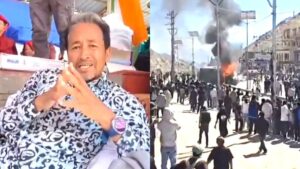
IE Explained: What to know about Ladakh protests demanding statehood, autonomy from Centre
Syllabus: Pre/Mains – Polity, Security
Why in News?
Ladakh protests (Sept 24, 2025): 4 killed, 30 injured; BJP office set on fire; triggered shutdown; Sonam Wangchuk ended 15-day hunger strike.
Background of Issue
- 2019 J&K Reorganisation Act → J&K bifurcated into 2 UTs: J&K (with legislature) & Ladakh (without legislature).
- Direct Centre rule → Local population feels excluded from decision-making.
- Loss of powers → Hill Development Councils weakened, job recruitment issues post-separation from J&K.
Key Demands
- Statehood → Full legislative powers, not just UT status.
- 6th Schedule inclusion → Autonomous District Councils for tribal-majority Ladakh (90% ST population).
- Decentralisation → Safeguard land, jobs, resources from industrial exploitation.
- PSC & Jobs → Early recruitment, Ladakh Public Service Commission.
- Political representation → Separate LS seats for Leh & Kargil.
Sixth Schedule Context
- Provision → Art. 244, 6th Schedule → ADCs in NE (Assam, Meghalaya, Mizoram, Tripura).
- Powers → Control over land, forests, water, agriculture, policing, health, etc.
- Precedent → 10 ADCs functional in NE; strong demand for similar setup in Ladakh.
Role of Sonam Wangchuk
- Identity → Engineer, innovator, Ramon Magsaysay Awardee (2018), inspiration for “3 Idiots.”
- Advocacy → Since 2019, demanded Scheduled Area status under 6th Schedule; backed by LAB & KDA.
- Symbolic protests →
- 2024: 21-day fast in sub-zero temps.
- Planned ‘Pashmina March’ (blocked by Sec. 144).
- 2024: “Delhi Chalo Padyatra” with 4-point agenda.
- Current stand → Urging peaceful movement, warns against corporates & mining lobby exploitation.
Protest Trajectory
- 2019 → Student-led protests, LAB & KDA formed.
- 2023–24 → Hunger strikes, failed MHA talks, shepherds’ issues (land loss, Chinese activity on LAC).
- 2024 Sept → Delhi Chalo Padyatra with 4-point charter.
- 2025 Sept → Violent escalation, police firing, fatalities; Wangchuk ends fast to prevent derailment.
Test Your Knowledge 01
Q1. With reference to the Sixth Schedule of the Constitution, consider the following statements:
- It is applicable only to tribal areas of Assam, Meghalaya, Tripura, Mizoram.
- ADCs under it can levy certain taxes and regulate land transfer.
- The Governor of the concerned State has the power to increase or decrease the area of an ADC.
Which of the statements given above is/are correct?
(a) 1 and 2 only
(b) 2 and 3 only
(c) 1 and 3 only
(d) 1, 2 and 3
Hint : All three are correct
IE Explained: Supreme Court to decriminalise defamation? What the law says, how this may be possible
Syllabus: Pre/Mains – Polity
Why in News?
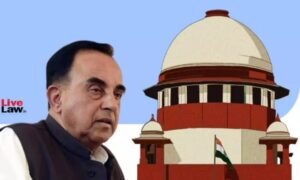
SC (Sept 22, 2025) hinted → “time to decriminalise defamation”; reconsidering 2016 Subramanian Swamy v. UoI ruling upholding criminal defamation.
Defamation in Law
- Definition (BNS §356) → words/signs/publications harming reputation.
- Scope → dead persons, companies, associations, ironic/alternative remarks.
- Harm test → lowers moral/intellectual/caste/occupation character, credit, or dignity.
Civil vs Criminal Defamation
- Civil → private wrong → damages/compensation.
- Criminal → public offence → fine + imprisonment.
- Conditions → defamatory nature + identifiable target + publication.
- Mens rea → intent/knowledge of harm essential.
- Truth defence → civil = absolute; criminal = only if “public good”.
- Criticism → chilling effect on media/activists; misuse to silence dissent.
Present Case (JNU Prof. vs The Wire)
- 2016 → Wire linked prof. to dossier (sex racket/separatist claims).
- 2017 → Magistrate summons.
- 2023 → SC sent matter back for review.
- 2024 → fresh summons upheld by Delhi HC.
- 2025 → Appeal before SC, reopening debate.
2016 SC Ruling (Subramanian Swamy v. UoI)
- Held → criminal defamation constitutional.
- Reasoning →
- Art.19(1)(a) not absolute; Art.19(2) allows restriction.
- Reputation = dignity = part of Art.21 (life & liberty).
- Harm to individual → harm to society.
- Proportionality test satisfied (exceptions for fair comment, reports, criticism).
- Truth + “public good” as safeguard.
- Rejection → chilling effect argument dismissed; emphasized dignity, fraternity, stability.
Path to Decriminalisation
- Current hurdle → 2016 precedent + 2024 Law Commission reaffirmation.
- Procedure →
- Fresh constitutional challenge by accused.
- Two-judge bench can’t overrule; must refer to CJI.
- CJI may constitute ≥5-judge Constitution Bench (Art.145(3)).
- Shift needed → Court must rethink balance: free speech (Art.19(1)(a)) ✦ reputation (Art.21).
Test Your Knowledge 02
Q2. In the context of Indian constitutional law, the principle of proportionality is applied to determine whether:
(a) Fundamental Rights can be suspended during national emergency.
(b) A restriction on a Fundamental Right is reasonable under Article 19(2).
(c) Directive Principles can override Fundamental Rights.
(d) Parliament can amend Fundamental Rights under Article 368
Hint: Think → how SC tests “reasonableness” of restrictions on rights (esp. Art.19 cases).
Q3. Which of the following correctly distinguishes civil defamation from criminal defamation in India?
- Civil defamation requires proof of malice, whereas criminal defamation does not.
- In civil defamation, truth is an absolute defence; in criminal defamation, truth must also serve public good.
- Civil defamation is treated as a private wrong; criminal defamation is considered a public offence.
Select the correct answer:
(a) 1 and 2 only
(b) 2 and 3 only
(c) 1 and 3 only
(d) 1, 2 and 3
Hint: Recall → difference lies in (i) truth defence rule and (ii) private vs public wrong; “malice” is not mandatory in civil law.
GSTAT Launched: Unified GST Appellate Tribunal Launched by FM
Why in News?
FM Nirmala Sitharaman inaugurated the Goods & Services Tax Appellate Tribunal (GSTAT) to streamline GST dispute resolution.
GST Appellate Tribunal (GSTAT)
Background & Need
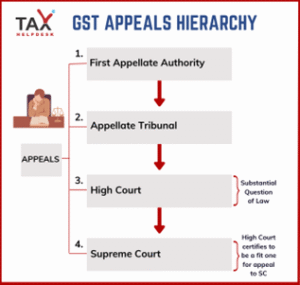
- GST law had envisaged an appellate tribunal, but it was never operationalized since 2017
- Multiple High Courts used to be the forum for GST appeals, causing fragmentation, delays, and inconsistent rulings
- Backlog is significant: ~4+ lakh appeals pending before existing appellate authorities
Key Features & Structure
- Unification: First and only national tribunal for GST appeals, integrating central & state jurisdictions
- Composition: Judicial + technical members; representation from Centre & States
- Benches & Reach: 116 members envisaged, 32 benches, 45 locations nationwide
- Principal Bench: In New Delhi, with state benches across the country
- Digital & Procedural Reforms:
- e-Courts portal for e-filing, case tracking & virtual hearings
- Simplified formats, checklists, plain language rulings
- Time standards for listing, hearing & pronouncement emphasized
